
AMD Jumps After Earnings Beat as AI Demand Strengthens the Next Phase of Its Growth Story
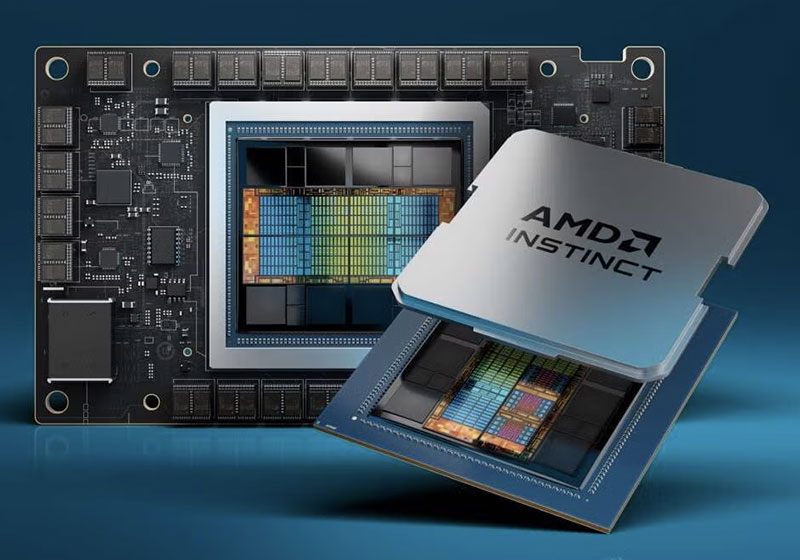
AMD’s latest earnings report gave investors a clearer picture of why the company remains one of the most closely watched names in the semiconductor sector. Strong first-quarter results, a better-than-expected revenue outlook, and continued momentum in data center chips combined to push the stock sharply higher. The market reaction suggests investors are increasingly viewing AMD not just as a beneficiary of the broader AI cycle, but as a company with several paths to growth as demand spreads beyond model training and into wider deployment.
The company beat expectations on both earnings and revenue in the first quarter, while also guiding second-quarter sales above market forecasts. That combination matters because in the current semiconductor environment, investors are looking for more than a simple earnings beat. They want evidence that demand is holding up, that the next quarter looks stronger, and that management sees enough visibility to support continued growth. AMD delivered all three.
At the center of the story was the data center segment, where revenue rose strongly from a year earlier and came in ahead of expectations. That performance reinforces the idea that the company is gaining from sustained spending on AI infrastructure, especially as cloud providers and enterprise customers keep expanding capacity for more compute-intensive workloads.
Data centers remain the main engine
The strongest part of AMD’s quarter was again the data center business. That is increasingly where the market wants to see proof of execution, because it is the segment most directly tied to AI demand. Revenue growth there suggests AMD is benefiting not only from the broader buildout of AI systems, but also from a customer base that now needs both general-purpose and AI-specific compute at a larger scale.
This matters because AI infrastructure does not run on a single chip type. Graphics processors remain critical for training and inference, but central processing units are also becoming more important as workloads expand into software execution, orchestration, and agent-driven tasks. As AI systems do more than generate answers and begin to interact with tools, applications, and operating environments, CPUs become a larger part of the stack.
That plays into AMD’s strengths. Unlike some rivals that are more narrowly tied to one category, AMD participates in both CPUs and GPUs. That gives it greater flexibility in selling into data centers and enables it to benefit from multiple layers of demand as AI deployment becomes more complex.
AI demand is broadening, not narrowing
One of the more important takeaways from AMD’s report is that the AI cycle is becoming wider in scope. Early enthusiasm focused on training large models, which favored a narrow set of chip types and suppliers. The next phase looks broader. Companies now need processors for inference, data center orchestration, agent-based software actions, and the surrounding server infrastructure that supports those workloads.
That shift may help companies like AMD, as it creates demand across a broader product mix. The company is already selling high-performance GPUs into AI workloads, but its CPU portfolio also gives it leverage as customers build out more complete computing environments. As AI usage moves from experimentation to operational deployment, that broad product mix becomes more valuable.
AMD’s planned launch of its Helios rack-scale system is part of that larger strategy. By combining its CPUs and GPUs into a single, larger server platform, the company is moving further toward integrated infrastructure rather than offering only individual components. That matters because the market is increasingly rewarding companies that can deliver more complete systems, not just chips in isolation.
Client and gaming results add support
Although the data center business drew most of the attention, other parts of the quarter also helped. The client segment performed above expectations, showing that PC-related demand has not weakened as sharply as some had feared. The gaming business also came in ahead of forecasts, providing another helpful signal that AMD’s earnings strength was not dependent on a single division alone.
That does not mean all risks have disappeared. The broader electronics market still faces constraints, especially as memory prices remain elevated. Higher memory costs can pressure device makers and, eventually, affect demand for PCs, tablets, and other consumer categories. Large hardware companies have already signaled concern that those input costs may weigh on margins.
execution in client and gaming is encouraging, but those segments may still face a more difficult cost environment if the memory shortage persists.
Why investors reacted so strongly
The sharp rise in AMD’s share price reflects more than relief. It reflects a market that had been asking whether AI-related chip demand would remain concentrated among the very largest players, or whether it would begin to lift a broader set of semiconductor companies with credible data center exposure. AMD’s results offered a strong argument for the second view.
The company is also benefiting from a more favorable narrative around competitive positioning. It is not just selling into traditional server markets anymore. It is increasingly seen as one of the companies capable of serving the next layer of AI infrastructure growth, especially as customers seek alternatives, diversify suppliers, and deploy more varied compute architectures.
That does not mean competition is fading. The market remains crowded and strategically important. But investors appear more willing to reward AMD when it shows it can grow across several segments at once while keeping the data center story intact.


