
Chinese AI Firms Race to Launch New Models
Chinese artificial intelligence developers are accelerating major model releases, sharpening competition with U.S. leaders while pursuing a strategy built on scale, affordability, and distribution. The market is moving into a faster cycle where upgrades arrive in months, and success depends as much on reach and integration as on benchmark scores.
The momentum builds on the shock delivered a little more than a year ago by DeepSeek, which drew global attention by offering strong performance at lower usage fees and lower reported production costs than many Western competitors. That moment reshaped expectations about how quickly Chinese firms could iterate, and it reinforced a playbook now visible across the sector: ship improvements quickly, keep pricing aggressive, and use ecosystems to drive adoption.
A faster release cadence
Recent launches highlight how compressed the cycle has become. Moonshot AI introduced Kimi K2.5 and positioned it as a step forward in areas such as video generation and agentic capabilities, a term often used for systems designed to carry out tasks on a user’s behalf rather than only respond to prompts. The timing mattered as much as the feature set, arriving only about three months after Moonshot’s prior K2 model.
Alibaba also announced an updated generative model designed to handle text, images, and video. The company said it performed strongly on the benchmark known as “Humanity’s Last Exam,” and it emphasized cost efficiency and workflow automation. The message was clear: it is no longer enough to build a capable model; it must be cheap enough to deploy at scale.
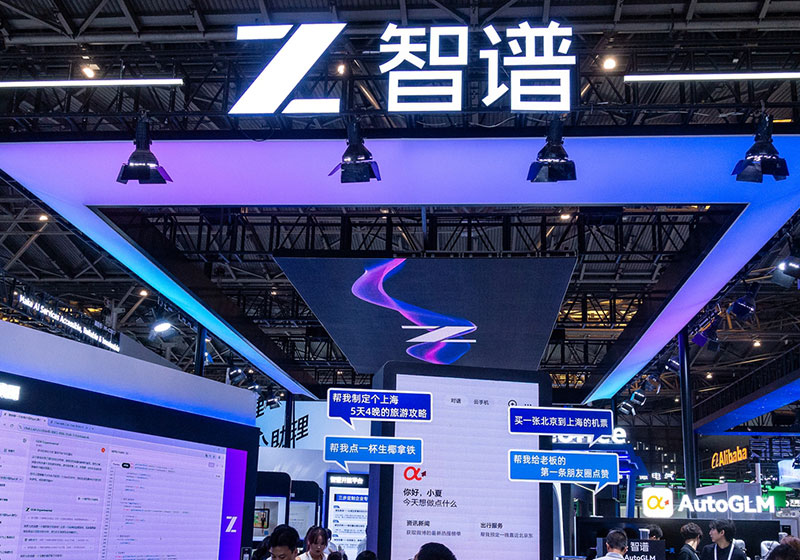
Other developers are moving quickly, too. Z.ai released a free version of its recently launched GLM 4.7 model, then limited new sign-ups for its AI coding tool after demand strained available compute resources. That sequence reflects a broader industry constraint: user interest can outpace infrastructure.
Baidu has also added to the competitive pressure with an upgraded release of its Ernie model line, keeping investor attention on whether Chinese developers are narrowing the gap with top-tier U.S. models. U.S. leaders have reinforced that narrative as well. Google DeepMind chief executive Demis Hassabis has suggested that China’s models may be only months behind those in the United States, even if the precise gap is hard to pin down.
Open-source distribution as a strategic lever
Capability is only one side of the story. Distribution is the other. Chinese models are more likely than leading U.S. systems to be released as open-source, typically allowing free or low-cost access and enabling customization. This is not simply a technical preference. It is a market entry strategy.
Lower barriers can make Chinese models attractive to developers and firms in emerging markets that want AI capabilities without premium subscriptions or strict vendor lock-in. The goal is to become the default layer on which local applications are built, thereby raising switching costs over time. Microsoft has cited estimates suggesting DeepSeek usage in Africa is substantially higher than in other regions, hinting that affordability is already shaping adoption patterns.
Winning users matters as much as benchmarks
In consumer technology, the model that wins is often the one embedded inside platforms people already use daily. That is why major Chinese platforms are treating AI as a traffic and retention contest. Tencent has pushed incentives tied to its Yuanbao chatbot around the Lunar New Year period, using the same habit-forming logic as earlier “red envelope” campaigns. ByteDance and Baidu have also used holiday promotions to keep users engaged with their AI apps.
Alibaba’s approach ties distribution directly to monetization by integrating Qwen into shopping and payments through its broader e-commerce stack, including Taobao. If an assistant can move users from conversation to transaction within a single interface, AI becomes a revenue engine that helps offset the high costs of building and running large models.
Two races are happening at once
Chinese AI firms are competing on two fronts simultaneously: improving capability and expanding deployment. That combination is why the story is not only about who wins benchmarks. It is about who can improve quickly, run models cheaply, and scale adoption through open-source releases and platform ecosystems. A year after DeepSeek reset expectations, China’s rapid release cadence suggests the next phase will be shaped by iteration speed and distribution power.


